
Investor info
Typeware is building world's first wearable keyboard & mouse device with a standard QWERTY layout; the next generation of human-computer interaction.
Typeware makes the workplace healthier, more inclusive and future-proof. That's because:
- it frees millions of intensive computer workers from postures that become painful in the long run & cause RSI
- it frees computer users from their desk
- it equips office workers for using virtual screens, and developers for fast and accurate typing in XR
Book our investor pitch & demo Request investor materials
-
Problem
Millions of intensive computer users still rely on input devices designed for desk-bound work. Even ergonomic alternatives often require compromises in posture, comfort or productivity.
Solution
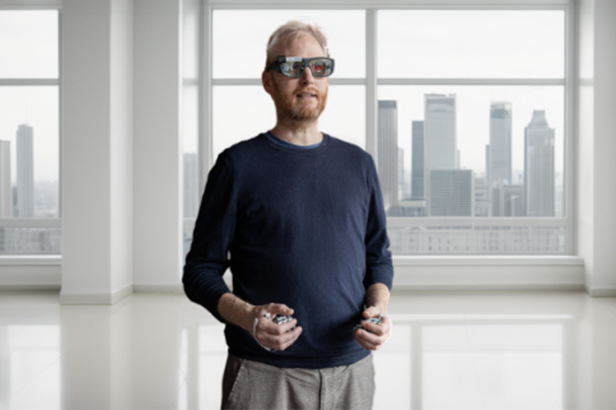
Typeware reimagines keyboard and mouse input as a wearable interface: familiar QWERTY interaction, mechanical keys and freedom of posture.
Why now
Longer computer hours, hybrid work, RSI/CANS awareness and the rise of spatial computing create a need for healthier and more flexible input devices. The addressable market is thus huge and expanding.
-
Start-up status: late preseed
✓ Working prototypes developed & demonstrated
✓ User tests in real-world settings
✓ Inbound interest from B2C & B2B & tech journalists
✓ Many paid pre-orders [and >50% have given detailed information about purchase motivation and user context]
✓ Iterative improvements in form, usability and manufacturability
✓ Patents & trade name registered
✓ Manufacturing partner on board
-
ㅤ
Typeware is not a better ergonomic input device, but a new, better way of working with the computer. In and outside the office, with or without a desk.


Investing in European future of work startups?
No is no problem. Whether you are looking for new tech startups to invest in, new inventions to invest in (such as new inventions in computer hardware), or tech startup investment opportunities…
Whether you want to invest in future of work startups, invest in Europe, stimulate disruptive technology investments or just go nuts for new inventions in computer hardware…
Your investment will make the difference in bringing our product to the market to relieve the physical strain on millions of office workers around the globe, as well as fulfilling the wishes of XR developers, digital nomads, remote workers, frequent plane and train travelers, neurodiverse high-performers, and people with temporary or chronic physical disabilities.
We especially welcome investors with experience in future of work, hardware, preventative health/ergonomics, prosumer technology or spatial computing.

Founder-market fit
Typeware is invented and engineered by Laurens van der Laar, a mechatronics application engineer, and Theo Bruinsma, a young human-computer interaction expert. Later on, Maartje Beelen, an expert in startup marketing, has joined them. In the past, all three have experienced chronic physical strain from prolonged computer use to a greater or lesser extent.
While no clinical tests are performed yet, the ergonomic experts of TNO back Typeware's preliminary claims of removing the physical causes of repetitive strain injury. Because of this as well as the positive evaluations of the first international product testers, the founders are sure of problem-solution fit.
They are now refining their working prototype into a market-ready product with the help of Dutch consortium partners. Simultaneously, late co-founder Maartje Beelen is preparing go-to-market, validating and realizing the potential of Typeware as the next-gen computer input device.
Investor FAQ
Why do people from all over the world ask for an alternative soltuion to (ergonomic) keyboards and mice?
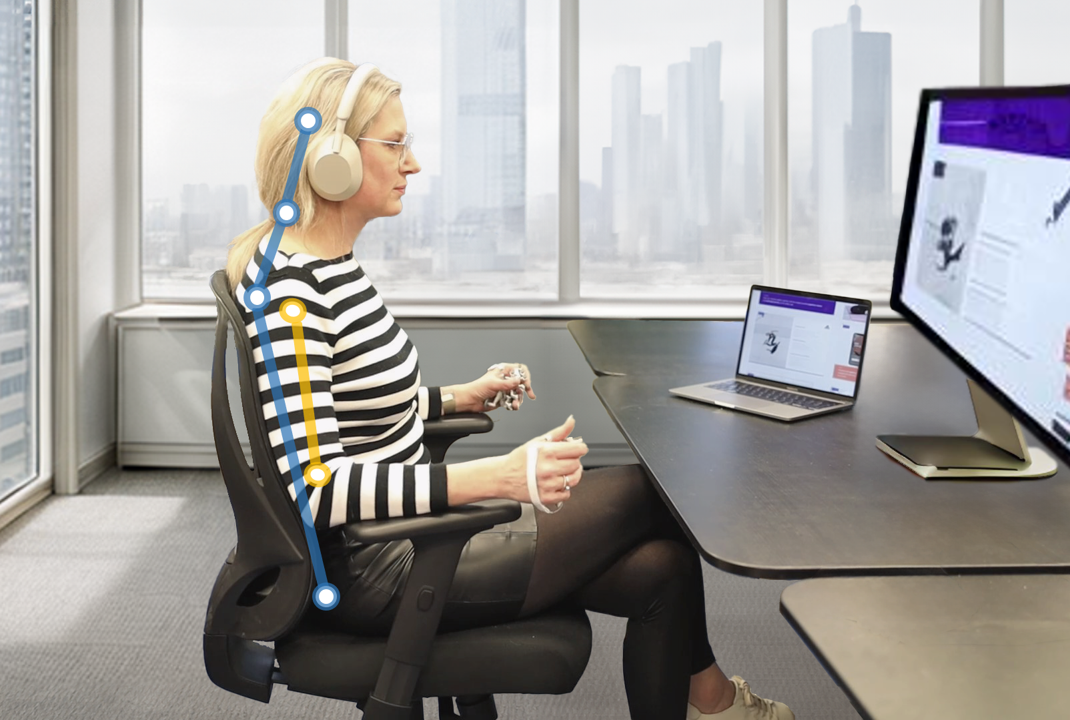
Keyboards and mice force arms forward and fix the body in an unhealthy position.
This physical load impacts professionals
that need to use their keyboard and mouse intensively and results in high prevalence of complaints of the wrist, arm, neck, and/or shoulder (CANS/RSI) and fatigue.
- Specific CANS is diagnosed as mouse arm, office shoulder, carpal tunnel syndrome (wide range of publications; extremely high monthly volume of internet searches into solutions)
- A-specific CANS is perceived as general fatigue or heightened stress and results in end-of-day tiredness, the need for breaks, physiotherapy, shorter work weeks, job switches or absence due to work-related illness, such as CANS or burnout (CBS, TNO; our own Laurens).
Why has such a device not been invented before?
Though there have been previous attempts to build a wearable keyboard, they all had huge learning curves (due to quirky layouts or abnormal hand positioning or both) that prevented them from mass adoption.
Additionally 3D printing technology has only recently reached a maturity to allow for rapid functional prototype iteration. This has turned out to be indispensable for a deceptively difficult job of engineering the ergonomic correctly.
Further, Typeware has achieved several technological breakthroughs, based on advancements in sensor technology
What makes Typeware's product so unique?
Typeware's flagship product is unique:
A. it is much more ergonomic than current ergonomic computer input devices, as it breaks users free from fixed, hunched postures. The founder of invented the product to fix this exact problem for himself and others like him.
B. the only mobile and desk-free computer input device that uses mechanical keys and the keyboard layout that you are used to. This protects worker productivity and minimizes the adjustment period. And last but not least, this enables computer users to productively work from anywhere, while standing up, sitting down, laying down or walking.
C. The only full keyboard device with integrated mouse that works spatially. This means it can be used in all realities: VR, AR and XR and physical reality.
Why will Typeware transcend exist product categories and ultimately disrupt the computer input devices market?
Typeware presents a new, healthy and future-proof way of working with computers. The practicality, mobility and ergonomics of the product stimulates wide adoption. See picture of transcended market segments.
Will speech input, eye tracking or brain-computer interfaces make this product redundant?
No. The future of human-computer interaction will be multimodal, not one input method replacing all others.
- Speech is powerful for commands and rough drafts, but fundamentally unsuited for sustained, precise, private, all-day knowledge work due to cognitive load, noise sensitivity, lack of precision, and social constraints.*
- Eye tracking is valuable for selection, accessibility and XR, but not a complete replacement for text input or fine cursor control.*
- Brain-computer interfaces are promising, especially for assistive use, but remain far from mainstream professional productivity.*
For knowledge work, productivity as well as precision, comfort, privacy and workflow fit remain decisive. While Typeware maintains or increases all of these factors, speech, eye tracking and BCIs don't. That makes these human-computer interface categories more likely to complement Typeware than replace it.
That's because Typeware preserves the familiar tactile QWERTY keyboard-and-mouse workflow, with low-latency, precise control, while making it wearable, ergonomic, mobile and XR-ready.
*Statements based on scientific research as well as personal experiences.
How big of a problem is RSI nowadays?
In the Netherlands, 45% of the people work 6+ hours/workday on the computer, of which 45% experiences Complaints of Arm, Neck, and Shoulder (CANS).
This means that 20% of the active Dutch workforce (= almost a million Dutch people) experience computer RSI.
If 45% of the 178 million individuals that work 6+h/workday with the computer and are based in high-income, highly digital-ready countries experience complaints, this would total to a serviceable addressable market of €299*0,45*178442500=
€ 24 009 438 375.
Of course, we do not forecast to capture this full market. We plan to conquer specific market segments using a multiple beachhead strategy. For more investor info, get in touch</a>.
Do the youngest generations still suffer from RSI?
Yes, RSI is not a thing of the past (TNO;Amsterdam UMC; SWZ). According to data from the Dutch RSI Association and TNO, about 25% of all Dutch workers under the age of 35 experience CANS/RSI. That's 1 out of 4.
For instance, our own Theo, the Electrical Engineer & HCI expert of Typeware, experiences RSI/CANS as a student and as a young professional.
- Persistent Problem: Dutch researcher Dr. Marijke Dekker (Delft University of Technology) demonstrated that RSI/CANSremains a constant, high-level threat for students and young generations (Gen Z) due to high screen time and psychosocial pressure. Her longitudinal, scientific research even shows that 1 out of 2 Dutch students experience RSI/CANS.
- Severe Impact: For younger generations, these physical complaints are not just minor discomforts; they lead to an average study delay of 24 months or even force students to drop out entirely. The same goes for young professionals. Together with the older generations, the fysical and mental ramifications of CANS/computer RSI force them to call in sick ath their job. Yearly, 68,400 Dutch employees
are absent because of arm, neck, shoulder or back complaints due to their computer work. This directly costs Dutch employers 480 million euro because of continued wage payments every year.
How long does it take for the target group to get used to the product?
Learning curve of Typeware One is minimal — if you can type with ten fingers, you can use it.
Random visitors of Dutch Design Week could type words within 5 minutes and visitors of the High Tech Campus Open Day could type even faster.
With the on-screen assistant, you can change the layout for the mechanical keys from QWERTY to AZERTY or QWERTZ or other, and set your own favorite keyboard combinations. This makes the changes to your way of working minimal.
We're now implementing extra haptic feedback via vibrations and will develop an onboarding game to further minimalize the learning curve.
With which operating systems and XR devices is the product compatible?
Typeware works with Linux, Windows, macOS, iOS & Android.
Typeware also works with Apple Vision Pro, Meta Quest, and other XR devices via Bluetooth.
Can I get a fitted, custom-made product or will it only be one-size-fits-all?
A custom-made, premium product is part of our long-term roadmap. Children's sizes are also on our long-term roadmap.
Will B2B or B2C be your main sales channel?
We plan to first sell to prosumers via e-commerce, as we found that our target group usually buys ergonomic devices this way. When we've gathered enough testimonials and user-generated content from customers and experts, we will proactively sell to companies and employers.